Serving Chattanooga & Hamilton County and north Georgia
Crawl Space Encapsulation in Chattanooga, TN
A musty smell in the house, floors that feel soft or bouncy, insulation hanging down under the floor, or water sitting in the crawl space after a storm. In Chattanooga's damp climate, the crawl space is where a lot of home problems start. We connect Chattanooga-area homeowners with local crawl space pros who can show you what's going on and what it takes to fix it.
- Free crawl space inspection
- Local Chattanooga-area pros
- Quick callbacks
Crawl space encapsulation seals the space under your home with a heavy vapor barrier on the floor and walls, closes the outside vents and controls humidity with a dehumidifier. It stops ground moisture from causing mold, wood rot and sagging floors. Call or send the form and we'll connect you with a local Chattanooga crawl space pro for a free inspection and estimate.
Experiencing any of these problems?
Pick the problem you're seeing. Every service below is handled by an independent local contractor we connect you with.
Crawl Space Encapsulation
Sealed vapor barrier on floor and walls, closed vents and humidity control.
Learn moreCrawl Space Vapor Barrier
Heavy reinforced plastic liners over bare dirt floors.
Learn moreCrawl Space Dehumidifier
Sized dehumidifiers that keep the crawl space dry year-round.
Learn moreCrawl Space Drainage & Sump Pump
Interior drains and sump pumps for crawl spaces that flood or stay wet.
Learn moreSagging Floor & Joist Repair
Steel support posts, sistered joists and rotted wood repair.
Learn moreCrawl Space Insulation
Replacing fallen or wet insulation, insulating sealed crawl space walls.
Learn more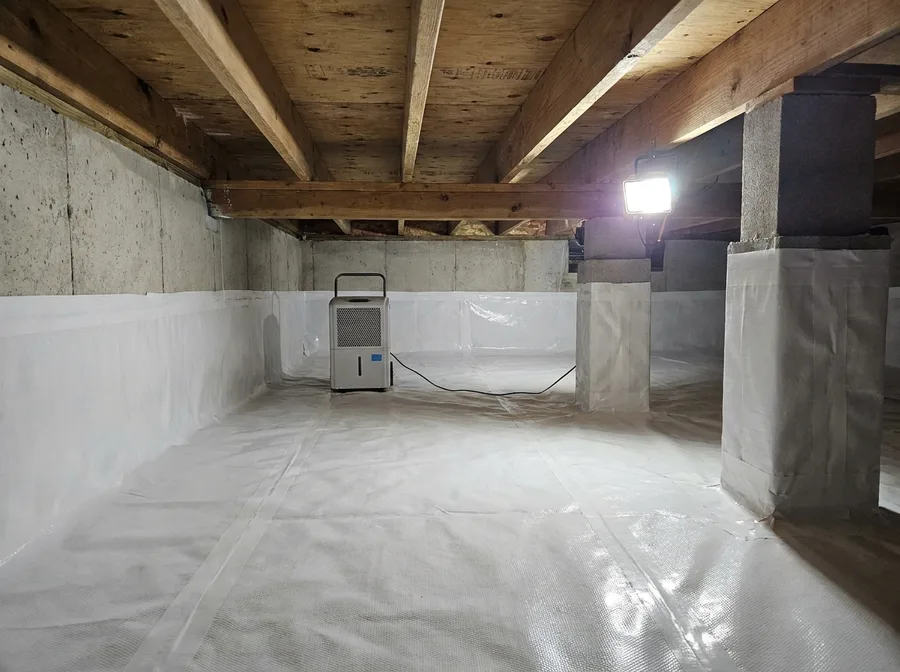
Crawl space encapsulation for Chattanooga homes
A traditional vented crawl space lets humid outside air in all summer. When that warm, wet air meets the cooler ground and wood under the house, it condenses. Over time that means damp insulation, mold on the joists, rusting ductwork and a musty smell that drifts up into the living space.
Encapsulation turns the crawl space into a sealed, dry space. A thick reinforced liner covers the ground and runs up the walls, seams and piers are taped, vents and gaps are sealed, and a dehumidifier keeps the air dry. Done right, it protects the wood framing and makes the floors above more comfortable.
- Heavy reinforced liner on floor and walls
- Seams, piers and penetrations sealed
- Vents and rim gaps closed
- Dehumidifier sized to the space
- Repairs to wet or damaged wood first
Crawl space vapor barriers
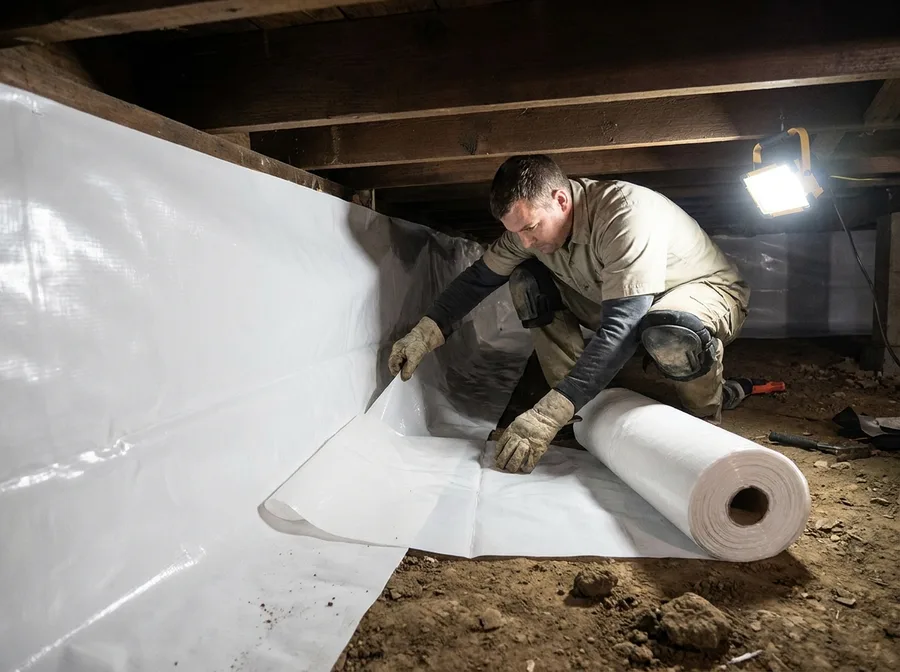
Bare dirt in a crawl space releases moisture into the air under your home every day. A vapor barrier is the first and most important step: a plastic liner laid over the ground so that moisture stays in the soil.
Thin plastic from a home store tears easily and leaves gaps. A pro install uses a thicker, reinforced liner, overlaps and tapes the seams and fastens it at the walls. On its own a vapor barrier helps a lot; combined with sealed vents and a dehumidifier it becomes full encapsulation.
- Reinforced liner, not thin plastic
- Overlapped, taped seams
- Fastened at walls and piers
- Clean, walkable surface
- Can be upgraded to full encapsulation
Crawl space dehumidifiers
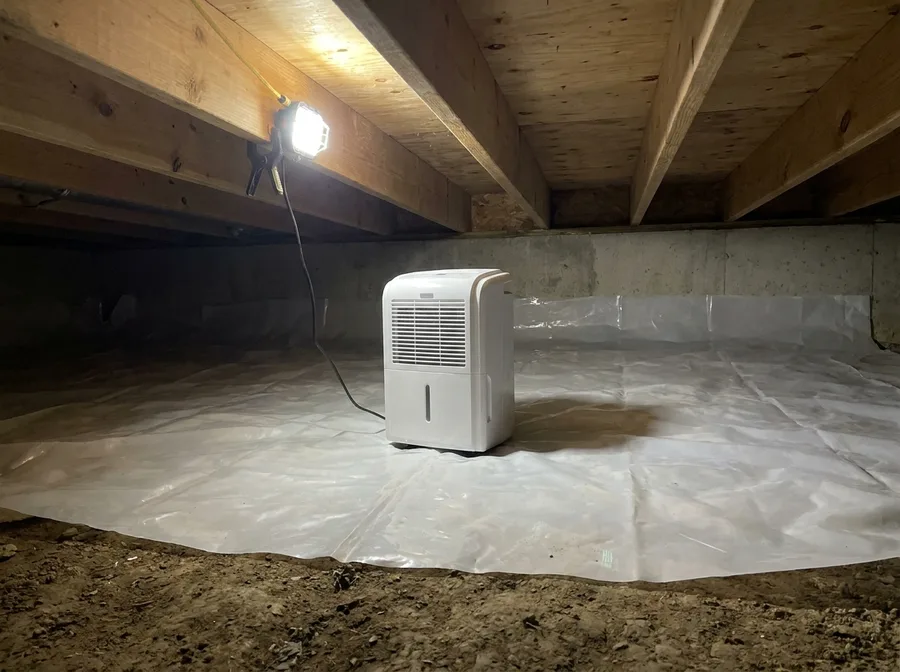
Once a crawl space is sealed, something has to remove the moisture that is still there. A crawl space dehumidifier is built for that job: it runs in a low, unheated space, drains automatically and keeps the humidity at a safe level all year.
A pro sizes the unit to your crawl space, sets the drain line to a sump or outside, and checks that the space stays below the humidity where mold grows.
- Unit sized to the space
- Automatic drain line
- Humidity kept in a safe range
- Works year-round
- Monitor or display to check levels
Crawl space drainage and sump pumps
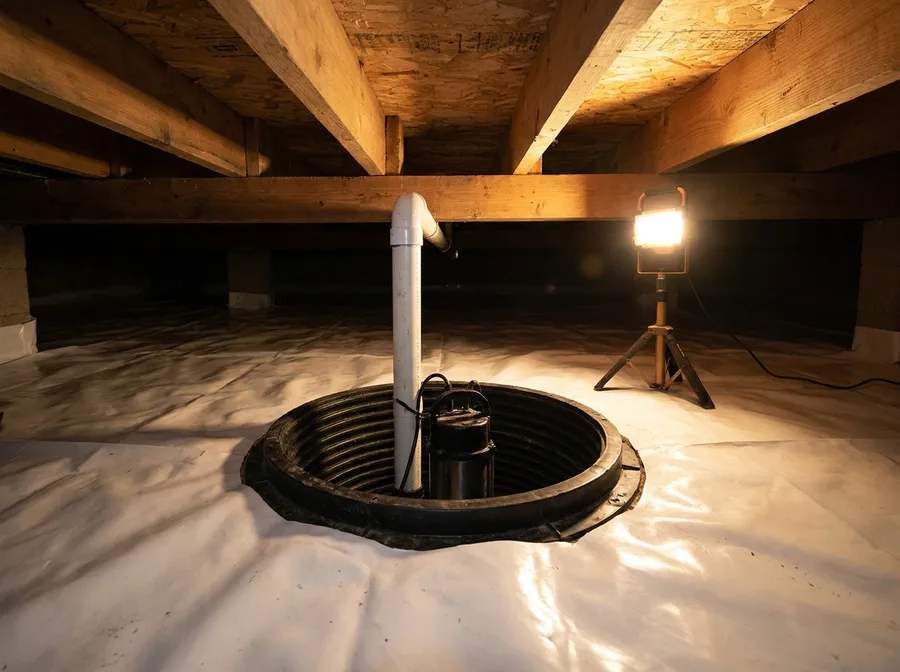
Some crawl spaces don't just get damp. They get standing water after heavy rain. Before sealing, the water has to go somewhere. An interior drain along the inside of the foundation walls leads water to a sump pit, and a sump pump sends it outside, away from the house.
Outside, gutters, downspout extensions and grading that slopes away from the house are often the cheapest fix and should be checked first.
- Water source found first
- Interior drain along the walls
- Sump pit and pump
- Discharge away from the house
- Gutters and grading checked
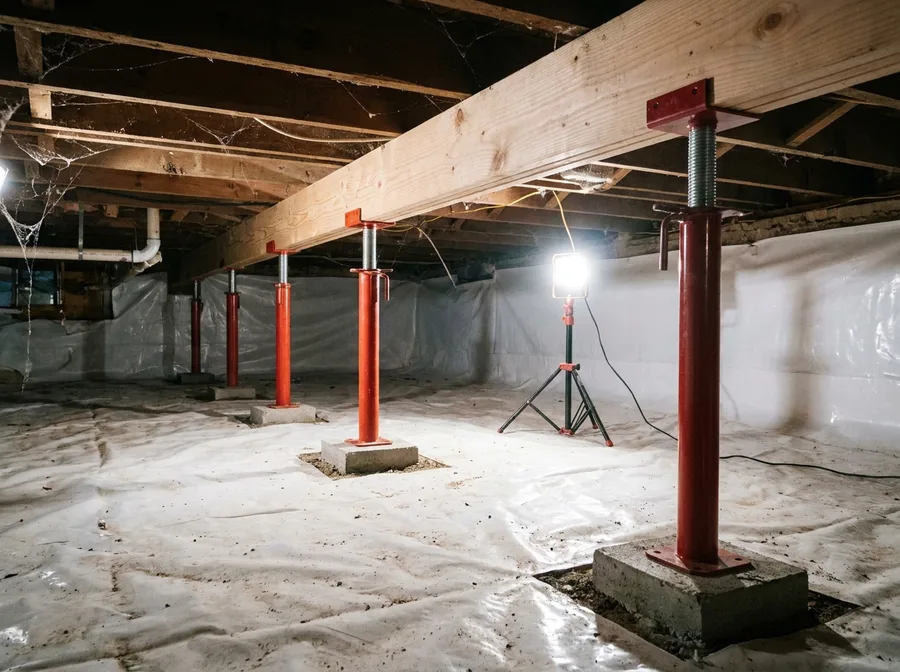
Sagging floor and joist repair
Floors that bounce, slope or feel soft are often a crawl space problem. Years of moisture weaken beams and joists, and wood or stone piers can settle. A pro can add adjustable steel support posts on proper footings, sister new lumber beside damaged joists and replace rotted sill plates.
Structural repair should go together with moisture control. Fixing the wood without stopping the dampness only brings the problem back.
- Adjustable steel support posts
- Proper footings under new supports
- Sistered or replaced joists
- Rotted sill plate repair
- Done together with moisture control
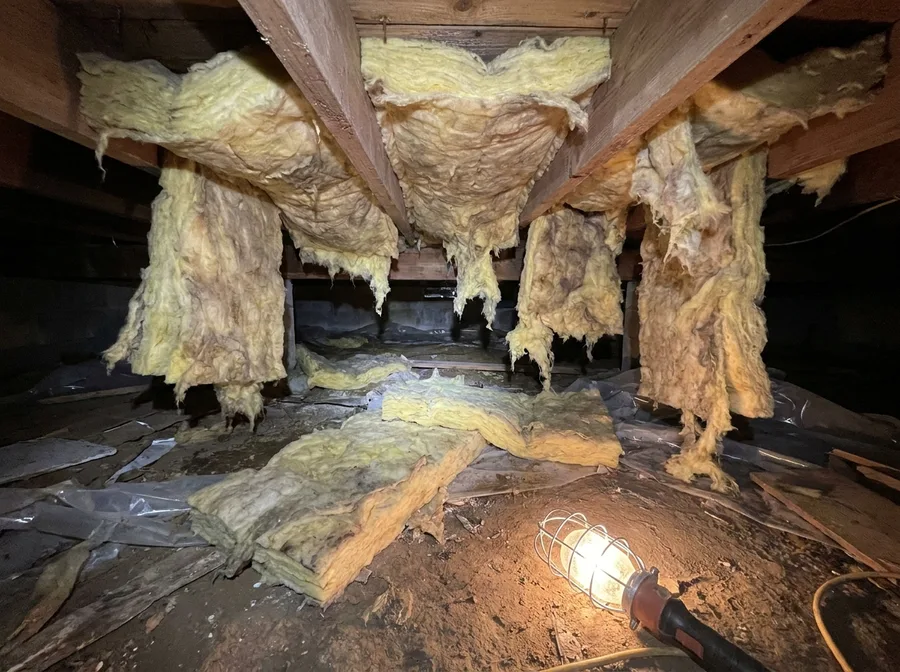
Crawl space insulation
Fiberglass batts between the joists are common in older crawl spaces, and they often end up wet, moldy or hanging on the ground. Wet insulation doesn't insulate and holds moisture against the wood.
In a sealed crawl space, insulation is usually moved from the floor to the foundation walls. A pro removes the old batts, cleans up, and insulates the walls so the whole space stays drier and the floors above stay warmer in winter.
- Wet or fallen insulation removed
- Clean-up of debris
- Wall insulation for sealed crawl spaces
- Warmer floors in winter
- Matched to the encapsulation plan
Signs your crawl space needs attention
- A musty or damp smell inside the house
- Floors that feel soft, bouncy or uneven
- Insulation hanging down or lying on the ground
- Mold or dark staining on joists
- Standing water or mud after rain
- Rusty ductwork or metal under the house
- Higher humidity and cooling bills in summer
- Pests and insects under the house
How much does crawl space encapsulation cost in Chattanooga?
The price depends on the size of the crawl space, how wet it is and whether there is wood damage. These are broad typical ranges:
| Job | Typical range |
|---|---|
| Vapor barrier only (dirt floor) | $1,500 to $4,000 |
| Full encapsulation (floor, walls, vents sealed) | $5,000 to $15,000 |
| Crawl space dehumidifier, installed | $1,200 to $3,000 |
| Crawl space drain and sump pump | $2,000 to $6,000 |
| Support posts for sagging floors | $1,500 to $5,000 |
| Insulation removal and replacement | $1,500 to $5,000 |
These ranges are general, not quotes. The real price comes from an on-site inspection by the local provider.
How it works
- 1
Call or send the form
Tell us what you're seeing. It takes a minute.
- 2
We connect you
We pass your request to a local Chattanooga-area crawl space pro.
- 3
Free inspection
The pro looks at the crawl space, checks moisture and wood, and takes photos.
- 4
Written estimate
You get a plan and a price in writing, with no obligation.
- 5
You decide
Compare, ask questions and choose what's right for your home.
Why crawl spaces struggle in the Chattanooga area
Chattanooga sits in a river valley along the Tennessee River, surrounded by ridges like Lookout Mountain, Signal Mountain and Missionary Ridge. Summers are long, hot and humid, and the area gets plenty of rain spread through the year. That combination is hard on vented crawl spaces: humid summer air flows in through the vents, rain soaks the soil under the house, and hillside lots send runoff toward foundations.
Many homes in Chattanooga, Red Bank, East Ridge, Hixson and the older parts of north Georgia were built over crawl spaces with dirt floors and vents. That's why crawl space moisture, mold, wood rot and sagging floors are some of the most common problems homeowners here call about.
Areas we serve
We connect homeowners across Hamilton County and north Georgia with local pros.
Frequently asked questions
What is crawl space encapsulation?
It seals the crawl space with a heavy vapor barrier on the floor and walls, closes the outside vents and controls humidity with a dehumidifier, so the space under the house stays dry.
Is encapsulation worth it in Chattanooga?
In a humid climate like Chattanooga's, a vented crawl space often stays damp all summer. Encapsulation protects the wood framing, reduces musty smells and can make floors more comfortable. Whether it's worth it for your home depends on how wet the space is, which an inspection will show.
How much does it cost?
A vapor barrier alone often runs $1,500 to $4,000. Full encapsulation is usually $5,000 to $15,000 depending on size, water and repairs. Your price comes from an on-site inspection.
Do I need a dehumidifier?
In most sealed crawl spaces, yes. The liner stops new moisture from the ground, and the dehumidifier removes what's left and keeps humidity at a safe level.
Should I close my crawl space vents?
Only as part of a full sealing plan with a vapor barrier and humidity control. Closing vents over a bare, wet dirt floor can trap moisture.
Can a crawl space cause mold in my house?
Moist air from a damp crawl space can move up into the home. Musty smells inside are a common sign. A pro can check moisture levels and look for mold growth under the house.
How long does encapsulation take?
Many jobs take one to three days. Larger crawl spaces, drainage work or wood repairs can take longer.
Do you do the work yourselves?
We're a free referral service. We connect you with an independent local crawl space contractor who inspects, quotes and does the work.
Ready for a free estimate?
Tell us what's going on and we'll connect you with a local crawl space encapsulation pro.